
Muito depende dos bonds, yields dos treasuries, crédito-liquidez e da situaçao no estreito de hormuz, há rumores de que a administraçao trump terá feito um " acordozinho " com os houtis para eles não estragarem muito as coisas na arábia saudita, etc veremos...
O império está a chegar ao fim da sua fase de topo, já passou aliás e como sempre no passado, há turbulência na transição.
Philip O Brien, na mouthpiece do establishment norte americano, O Atlântico, que já teve uma revista em PT, comenta:
https://www.theatlantic.com/ideas/2026/ ... ne/688639/
"The American age that followed World War II was bound to end eventually. What’s shocking is how suddenly that moment has arrived. In the past six months, America’s power—long exemplified by the world’s best warfighting equipment and most highly trained military personnel, a global network of bases and logistics systems, and military and diplomatic partnerships with all corners of the world—has proved insufficient to defeat Iran, an economically stagnant regime armed with cheap missiles and drones.
O’Brien admits that Iran’s destruction of key US regional bases is what led to the immediate balking of US aggression, a thesis which had originally been scoffed at by establishment flacks until the reality slowly set in:
The effect of these losses on U.S. operations was nearly instantaneous. A key reason the Trump administration did not militarily escalate with Iran over the summer, despite all of its threats to do so, was the loss of the base in Bahrain—which the Navy relied on for decades to resupply ships in the Middle East. Instead, the so-called logistical tail for U.S. naval operations had to stretch all the way to Diego Garcia, a British-controlled island in the Indian Ocean more than 2,000 miles from the Strait of Hormuz.
The vulnerability of U.S facilities near Iran is so great and the prospective cost of repair is so large that, as The Washington Post reported last month, administration officials might not want to rebuild them at all. One way to spin the situation is as a “once-in-a-generation chance for the Pentagon to reconsider its presence” in the Persian Gulf region, as the Post put it. But the basic fact is that defending key facilities against even a less technologically advanced foe such as Iran is not something that the U.S. military can currently do.
The key paragraph however has to be this one, wherein O’Brien explains how vastly China has dwarfed the US in all the key modern enables of true military and economic power:
The erosion of American manufacturing superiority is an old story, but it is a key element for understanding the end of the American age. The U.S. could once outbuild other powers by tapping into civilian production. During World War II, Americans retooled the automotive industry to build aircraft. Today, relative to the rest of the world, the United States does almost no civilian shipbuilding. China, in comparison, makes about 50 percent of the ships in the world and controls about 80 percent of the world’s drone manufacture. Having built its military to prevail in a burst of high-intensity fighting, the United States simply lacks the equipment, stockpiles, and rested forces to engage China for any extended period of time.
He concludes without the usual smarmy equivocating, which leaves the door open to some fantasy of American resurgence. His determination is final—America is done:
All of history’s previous superpowers have eventually declined. The emergence of East Asia as the center of the world’s economic output was always going to reduce American influence. The transition from one global age to the next is seldom evident in the moment. As recently as February, few experts would have predicted that the United States—a global colossus for more than 80 years—would end up so hamstrung by Iran. But the conflict reveals something important: The American age has come to an end. U.S. global dominance cannot continue without the power sources that brought it about."
Yep. O que é que isto significará para investidores, no futuro? Ainda não é certo.
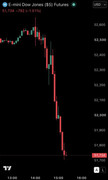
Quanto aos mercados o que era preciso era mais um anuncio trumpiano de uma nova vaga de tarifas sobre todo o mundo que fizesse crashar o sp500 durante 1 semana, isso é que era um dip a sério. Tenho certeza que o trump e associados apreciariam mais umas compras em saldos: